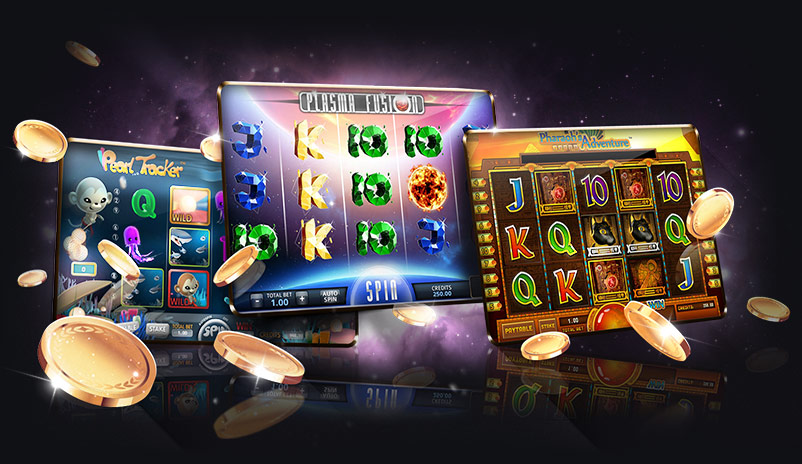
maria bingo casino — bingo og lotteri: alt du skal vide
maria bingo casino er mere end bare at krydse tal af på et skema. Det er en social aktivitet, der bringer mennesker sammen, både online og offline. I 2026 er der mange innovative funktioner, der gør spillet endnu mere underholdende. maria bingo casino live er et godt sted at starte for nybegyndere, der ønsker at lære reglerne.
See also:
- Det essentielle om maria bingo casino gratis
- maria casino at a Glance
- Bonuses & Wagering Terms at maria casino
- Hvordan fungerer maria bingo casino indbetalingsbonus egentlig?
- Betalingsmetoder: maria bingo casino indbetalingsbonus og sikker betaling
- Ofte stillede spørgsmål om maria bingo casino live
- Test dig selv – spiller du ansvarligt hos maria casino?
Det essentielle om maria bingo casino gratis
The concept of a second chance is one of the most profound and transformative ideas in human experience. It embodies the possibility of redemption, the opportunity to correct past mistakes, and the hope that our future is not irrevocably determined by our past actions. In literature, film, and philosophy, the second chance is a recurring motif, often serving as the catalyst for character development, moral exploration, and emotional catharsis. It is the moment when a protagonist, having faced failure, loss, or moral compromise, is offered the opportunity to rewrite their story, to choose a different path, or to reconcile with those they have wronged. This narrative device resonates deeply with audiences because it mirrors our own desires for forgiveness, growth, and the belief that we are not defined solely by our worst moments. In real life, second chances manifest in myriad forms: a recovering addict entering rehabilitation, a student retaking an exam after failing, a relationship mended after betrayal, or an employee given a new project after a costly error. Each of these scenarios carries with it a weight of uncertainty and vulnerability, as the recipient must grapple with the fear of repeating past mistakes while summoning the courage to try again. The psychological underpinnings of a second chance involve a complex interplay of self-awareness, accountability, and resilience. To truly embrace a second chance, one must first acknowledge the failure without succumbing to self-condemnation, then actively work to understand the root causes of the original misstep, and finally commit to a course of action that demonstrates genuine change. This process is rarely linear; it often involves setbacks, moments of doubt, and the temptation to fall back into old patterns. Yet, it is precisely through this struggle that the second chance gains its power. It forces individuals to confront their own limitations, to develop new coping strategies, and to build a more authentic sense of self. Moreover, the granting of a second chance is not solely the responsibility of the individual seeking it; it also requires a community, institution, or person willing to extend grace. This act of granting forgiveness is not a simple dismissal of wrongdoing but rather a deliberate choice to prioritize potential over past, to believe in the capacity for human change, and to invest in the possibility of a better outcome. In social contexts, second chances can take on systemic dimensions, such as criminal justice reforms that offer rehabilitation over punishment, educational policies that allow for academic redemption, or workplace cultures that encourage learning from failure rather than penalizing it. These institutional second chances are essential for fostering a society that values growth and inclusivity, yet they are often fraught with controversy, as questions of fairness, safety, and accountability arise. For instance, should a convicted felon have the right to vote or gain employment? Should a doctor who made a fatal error be allowed to practice medicine again? These questions highlight the tension between compassion and risk, between the individual’s right to redemption and the collective’s need for protection. Ultimately, the concept of a second chance challenges us to reconsider our own beliefs about human nature. Are people fundamentally capable of change, or are we bound by our pasts? The answer likely lies in the nuanced reality that while some individuals may squander their opportunities, many others rise to the occasion, transforming their lives in ways that inspire others. The stories of individuals who have successfully navigated second chances often share common elements: a supportive network, a clear goal, and an internal drive to not let the opportunity slip away. These narratives serve as powerful reminders that our mistakes do not have to be our final chapters. They teach us that failure can be a teacher, that regret can be a motivator, and that redemption is possible when we are willing to do the hard work of self-improvement. In a world that often feels unforgiving and quick to judge, the idea of a second chance offers a counter-narrative of hope and possibility. It encourages us to be more merciful in our judgments of others, to recognize that everyone is fighting their own battles, and to understand that the line between success and failure is often blurred by circumstance, timing, and support. As we navigate our own lives, we may find ourselves in the position of either seeking a second chance or granting one to someone else. In either role, we are participating in a timeless dance of vulnerability and trust, where the stakes are high but the rewards are even higher.
spilleautomater med høj rtp 2026 — spillemaskiner med høj rtp
maria casino at a Glance
| Feature | Details |
|---|---|
| Månedlig bonus | 75 spins |
| Player rating | 300/5 |
| Jackpot spil | 18,900 jackpot |
| Payout time | 125% up to 24 hours |
| RTP | Up to 50% |
Bonuses & Wagering Terms at maria casino
- 50 ekstra spins på dit første indskud
- 75 % match op til kr200
- 150 % bonus op til kr150
- 50x wagering på 7 dage
- 40x omsætning på 14 dage
Hvordan fungerer maria bingo casino indbetalingsbonus egentlig?
Bingo! The word itself is a sudden, sharp exclamation, a verbal firecracker that pops in the air and leaves a faint echo of triumph. It’s the sound of a perfect alignment, the moment when chaos snaps into order, when the scattered pieces of a puzzle click into a coherent picture. In a crowded bingo hall, it’s the cry that silences the murmur of daubers and the rustle of cards, as every head swivels toward the winner, a mix of envy and admiration in their eyes. But beyond the game, “Bingo!” has become a universal shorthand for a eureka moment, a sudden realization, or the satisfying conclusion to a search. Think of the detective who finally spots the clue that cracks the case—he doesn’t say “I’ve found it,” he slaps the table and shouts “Bingo!” It’s the word that erupts when you find your keys after twenty minutes of frantic searching, or when the last crossword clue falls into place, or when the stock market ticker finally shows the number you’ve been waiting for. The word carries a physicality too: the sharp ‘b’ that bursts from the lips, the short ‘i’ that snaps, the nasal ‘n’ that hums, and the round ‘go’ that rolls out like a victory lap. It’s a word that demands to be spoken aloud, not whispered, and it often comes with a gesture—a fist pump, a raised arm, a slap on the back. In the world of gaming, it’s the ultimate payoff, the reason players sit for hours, dabbing numbers with a sense of mounting anticipation. Each number called is a heartbeat, and when the final one lands, the air thickens with possibility. But “Bingo!” is not just for games; it’s a tool of communication. In boardrooms, it punctuates a successful pitch; in classrooms, it marks a student’s correct answer; in laboratories, it announces a breakthrough. It’s a word that bridges generations—your grandmother knows it from her Friday night games, your child knows it from a mobile app, and your coworker knows it from a team-building exercise. The beauty of the word lies in its simplicity: it’s a monosyllabic burst of joy, a linguistic high-five. It’s also a word that has evolved, spawning variations like “Bingo bango!” or “Bingo was his name-o,” but the core remains the same—a declaration of success. Consider the psychology: when you say “Bingo!” you’re not just informing others; you’re affirming yourself, releasing a burst of dopamine that makes the moment memorable. It’s why game shows use it, why advertisers use it in slogans (“Bingo! You’ve won!”), and why it’s become a meme in online culture, often typed in all caps with multiple exclamation points. The word even has a visual quality—it’s bright, bold, and colorful, like the flashing lights of a slot machine. It’s no wonder that it’s been adopted into other languages, from Spanish (“¡Bingo!”) to Japanese (“ビンゴ!”), each culture adding its own flavor. But let’s not forget the humble origins: the game itself dates back to 16th-century Italy, where it was called “Il Giuoco del Lotto d’Italia,” and it spread through France and Germany before reaching America in the 1920s. The word “bingo” is said to have come from a mishearing of “beano,” a game where players marked their cards with beans. Legend has it that a player, upon winning, was so excited she shouted “Bingo!” instead of “Beano!” and the name stuck. That moment of accidental genius is fitting—because “Bingo!” is all about the unexpected thrill, the sudden spark that turns a routine moment into a celebration. It’s the word that captures the essence of luck, timing, and persistence. When you say it, you’re not just claiming a prize; you’re claiming a moment of pure, unadulterated victory. It’s a word that invites others to share in your joy—imagine saying it in a quiet library, and the librarian smiles, the stranger next to you nods, and the room feels a little warmer. It’s a social glue, a way to connect over a shared win, whether it’s a game of chance or a life achievement. In fact, therapists sometimes use it as a positive reinforcement tool, encouraging clients to say “Bingo!” when they recognize a harmful thought pattern, turning a negative into a playful, empowering moment. The word is also a masterclass in phonetics: the plosive ‘b’ creates a burst of air, the short vowel keeps it punchy, and the velar nasal ‘ng’ adds a resonant finish. Try saying it slowly—b-in-go—and you’ll feel the build-up and release. It’s a word that’s almost impossible to say without a smile, which is why it’s a favorite among motivational speakers and life coaches. They’ll tell you to “find your bingo moment,” that instant when everything clicks, and to savor it. And they’re right: life is full of small bingos—the perfect parking spot, the last slice of pizza, the unexpected compliment. The word gives us a way to celebrate these micro-wins, to acknowledge that even in the mundane, there’s a spark of joy. It’s also a word that has permeated pop culture: from the song “Bingo” by The Wiggles to the iconic scene in “The Simpsons” where Marge wins a bingo game, to countless movies where a character shouts it in a moment of revelation. It’s a word that’s both timeless and modern, as relevant in a 1950s church hall as it is in a 2024 virtual reality game. And let’s not overlook its use in programming and debugging—when a developer finally fixes a bug, they might just type “Bingo!” in the commit message, a nod to the satisfaction of solving a puzzle. Even in mathematics, there’s a “bingo” moment when a proof falls into place, and in chess, when you spot the winning move. The word transcends disciplines, uniting us in the universal human experience of sudden understanding. It’s a word that says, “I’ve been searching, and now I’ve found it,” and that’s a powerful thing. So the next time you say “Bingo!”—whether you’re playing the game, cracking a joke, or celebrating a victory—remember that you’re part of a long tradition of joy, a tradition that began with a simple game and a misheard word, and has grown into a global expression of triumph. It’s a word that’s more than a word; it’s a feeling, a sound, a moment. And that’s why “Bingo!” will never go out of style—it’s the perfect exclamation for the imperfectly wonderful chaos of life.
En detaljeret sammenligning af maria bingo casino kan spare dig for mange penge.
Betalingsmetoder: maria bingo casino indbetalingsbonus og sikker betaling
Ofte stillede spørgsmål om maria bingo casino live
Hvad er maria casino?
maria casino er en online bingoudbyder og lotteriudbyder, der tilbyder en bred vifte af spil og jackpots.
Hvordan opretter jeg en konto hos maria casino?
Du opretter nemt en konto ved at besøge maria casinos hjemmeside, udfylde registreringsformularen og foretage din første indbetaling på mindst kr24.
Hvilke spil kan jeg spille hos maria casino?
Hos maria casino kan du spille forskellige bingospil, kradselodder og deltage i lotterier med store præmiepuljer.
Hvilken licens har maria casino?
maria casino er licenseret af Spillemyndigheden, hvilket sikrer en sikker og fair spilleoplevelse.
Tilbyder maria casino en velkomstbonus?
Ja, nye spillere kan få en generøs velkomstbonus på op til 100 gratis spins ved indbetaling, som er underlagt en omsætningskrav på 25x gennemspil inden for 30 dage.
Test dig selv – spiller du ansvarligt hos maria casino?
Spil er kun for voksne over 18 år. maria casino opfordrer til ansvarligt spil, og vi anbefaler, at du sætter grænser for både tid og penge, før du går i gang. Husk, at spil skal være underholdning – aldrig en måde at jagte tab på. Spillemyndigheden fører tilsyn med det danske spillemarked, og du kan spærre dig selv i ROFUS-registeret for at begrænse dit spil. Har du brug for hjælp, kan du kontakte StopSpillet på 70 22 28 25. Spil kun for sjov, og søg støtte, hvis spillet føles problematisk.
live casino free 2026 — live casino free rigtige penge